
Alumni News
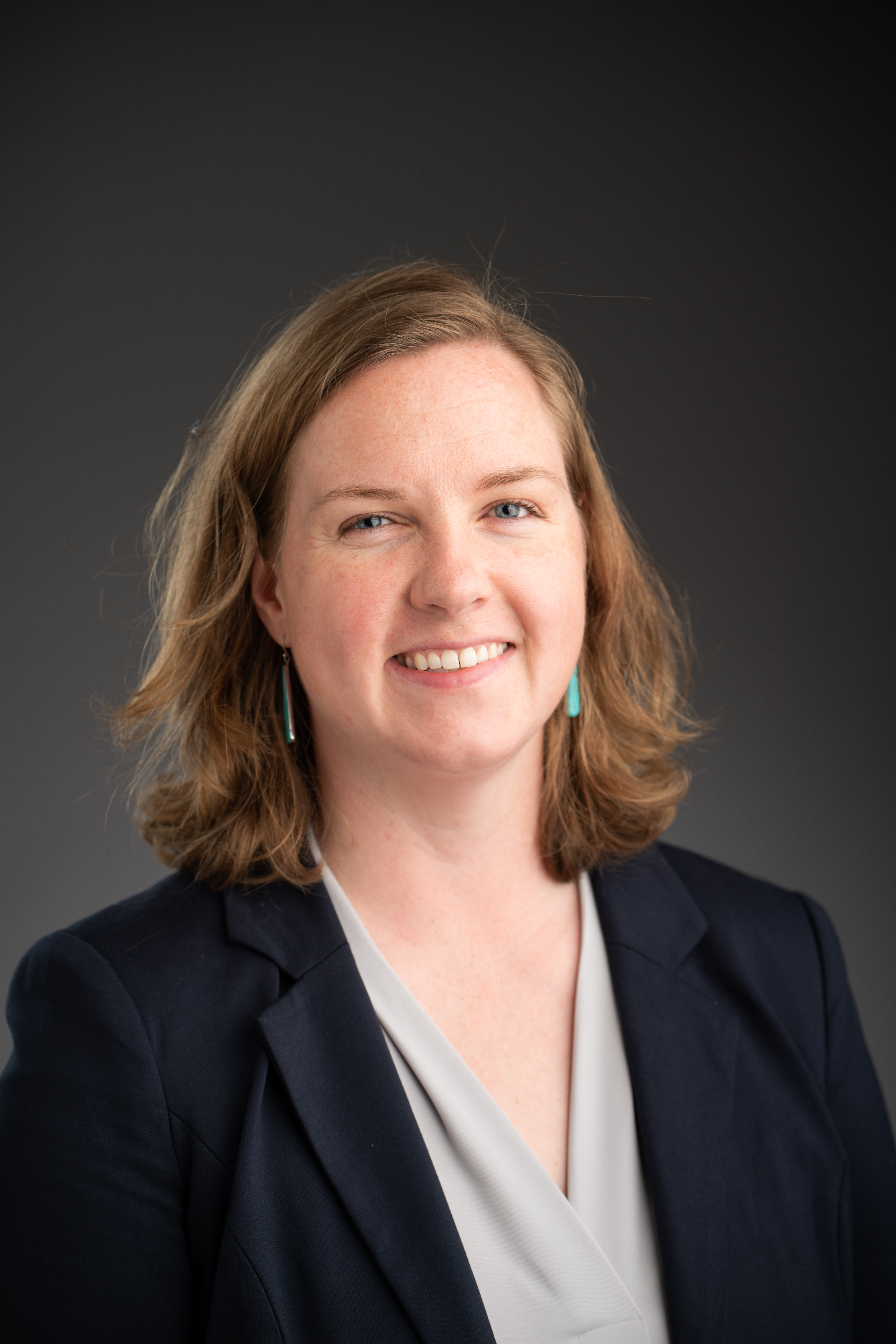
Freya Rowland, 2018-2019 CIGLR Postdoctoral Research Fellow.
Exploring Freshwater Mysteries: Science Beneath the Surface with Freya Rowland
..
2018 – 2019 Postdoctoral Research Fellow
Freya Rowland was a Postdoctoral Research Fellow at CIGLR from 2018 to 2019, where she played an integral role on the harmful algal bloom (HAB) research team. She contributed significantly to the analysis of phosphorus dynamics in Lake Erie, examining long-term phosphorus and chlorophyll‑a data from 2008 to 2018 to understand how Maumee River phosphorus loads influence algal biomass and bloom patterns in the lake’s western basin. Her analyses revealed spatial differences in relationships between phosphorus forms and algal responses, helping clarify why reductions in spring phosphorus loads alone have not consistently reduced bloom intensity and toxicity. Rowland’s work informed probabilistic models that improve understanding of bloom growth patterns and support water quality management strategies under the Great Lakes Water Quality Agreement.

CIGLR Postdocs at a CIGLR All Partners Meeting. (L-R) Drs. Tian Guo, Thomas Evans, Freya Rowland, and Qianqian Liu. Photo Credit: Michele Wensman.
During her time at CIGLR, Rowland collaborated closely with NOAA GLERL and University of Michigan scientists to explore the drivers of algal blooms and toxicity in western Lake Erie. Using high-quality monitoring data, she found that spring phosphorus loads are a weak predictor of algal biomass, revealing the need for more nuanced water quality management strategies. She also worked with colleagues to apply predictive models of microcystin concentrations using chlorophyll‑a as an indicator of algal biomass, helping managers better anticipate bloom toxicity.
Rowland’s fascination with how organisms interact with their environment has shaped her career. She has explored ecosystems from storm tunnels in Minneapolis and St. Paul, Minnesota to the Laurentian Great Lakes, with a unifying theme: understanding how environmental changes affect ecosystem function. She completed two postdoctoral fellowships, one at CIGLR focusing on HABs, and another as a Donnelley Postdoctoral Fellow in David Skelly’s lab at Yale, studying the ecology and evolution of pond-breeding amphibians. In this work, she examined how the complex life history of amphibians, which transition from fully aquatic larvae to terrestrial adults, affects exposure to contaminants such as methylmercury and influences food web dynamics.

Freya Rowland (L) and Yale University graduate student Dr. Yara Alshwairikh (R, currently with the NYC Natural History Museum) looking for wood frog tadpoles in Connecticut wetlands.
After her postdoctoral work, Dr. Rowland continued her career in aquatic ecology and water quality research. She is currently a Research Ecologist at the U.S. Geological Survey’s Columbia Environmental Research Center (CERC). At CERC, she studies aquatic food webs, community ecology, and water quality. She leads lab analyses for thiamine (vitamin B1) concentrations and thiamine-dependent enzymes such as thiaminase, an enzyme produced by some forage fish linked to predator thiamine deficiency. Her research explores how thiamine deficiency, increasingly observed in wild salmon populations globally, affects metabolism, behavior, disease susceptibility, and survival. She collaborates with NOAA, USGS, universities, and fisheries scientists to investigate the causes of thiamine deficiency, potential food web drivers, and strategies for mitigation.
In addition to HABs and thiamine research, Rowland has studied the ecological impacts of neonicotinoid pesticides (a widely used class of insecticides) on amphibian larvae, long-term nutrient dynamics in Lake Erie tributaries, and nutrient limitation in lakes in Nepal. She has also explored predator-prey interactions in ponds, showing how native amphibians can control mosquito populations as effectively as introduced mosquitofish. Across all of her work, she integrates field observations, lab experiments, long-term data analysis, and ecological modeling to answer applied questions relevant to ecosystem health and management.
Rowland’s research continues to address critical questions in aquatic ecology, bridging fundamental science with practical solutions for environmental challenges, from the Great Lakes to global freshwater systems.
Q & A WITH FREYA ROWLAND
Q: Which is your favorite Great Lake and why?
Lake Superior! I grew up visiting the lake and was always amazed by the incredible clarity, cold waters, and sense of mystery. After working on Lake Erie during my postdoc, I developed a strong appreciation for that lake as well. Lake Erie is the most productive of the Great Lakes and has fascinating limnological differences among the three basins.

Freya Rowland has done multiple studies on the ecology and evolution of pond-breeding amphibians.
Q: Where did you do your college/graduate/postdoc work and what did you study?
I completed my undergraduate work at the University of Wisconsin–Madison, where I worked as an undergraduate researcher enumerating zooplankton at the Center for Limnology. Next, I earned an M.S. with Dr. Mike Vanni at Miami University (Ohio), studying food chain efficiency in aquatic food webs, followed by three years in local government in Minneapolis, Minnesota monitoring lakes, streams, and stormwater. Ultimately, I missed research, so I returned for my Ph.D. in the lab of Dr. Ray Semlitsch at the University of Missouri, where I studied the ecological role of pond-breeding amphibians. As some of the most imperiled vertebrates, I was curious about how extirpation of populations across the landscape changed pond ecosystem function.
I completed my first postdoc at CIGLR under the mentorship of Dr. Craig Stow, a senior scientist at NOAA’s Great Lakes Environmental Research Laboratory (GLERL). I credit Craig with convincing me to switch to Bayesian statistics because of the stronger inference and easier interpretation. I arrived assuming HABs would be straightforward to study, but quickly learned that the system was far more complicated than expected. Lake hydrodynamic patterns, loading from tributaries, and bloom toxicity were all much harder to quantify than anticipated. Still, the work was a fun and rewarding challenge.
After CIGLR, I moved to Yale University on a Donnelley Postdoctoral Fellowship. There, I worked with Dr. Dave Skelly to examine amphibian persistence across landscapes in the face of changing climate and land use. I used the statistical skills gained while working with Craig to analyze a long-term dataset from more than 60 ponds in northeastern Connecticut, exploring population trends and how they related to both regional drivers (e.g., winter temperature and precipitation) and hyperlocal characteristics (e.g., population density, pond canopy, and pond depth).
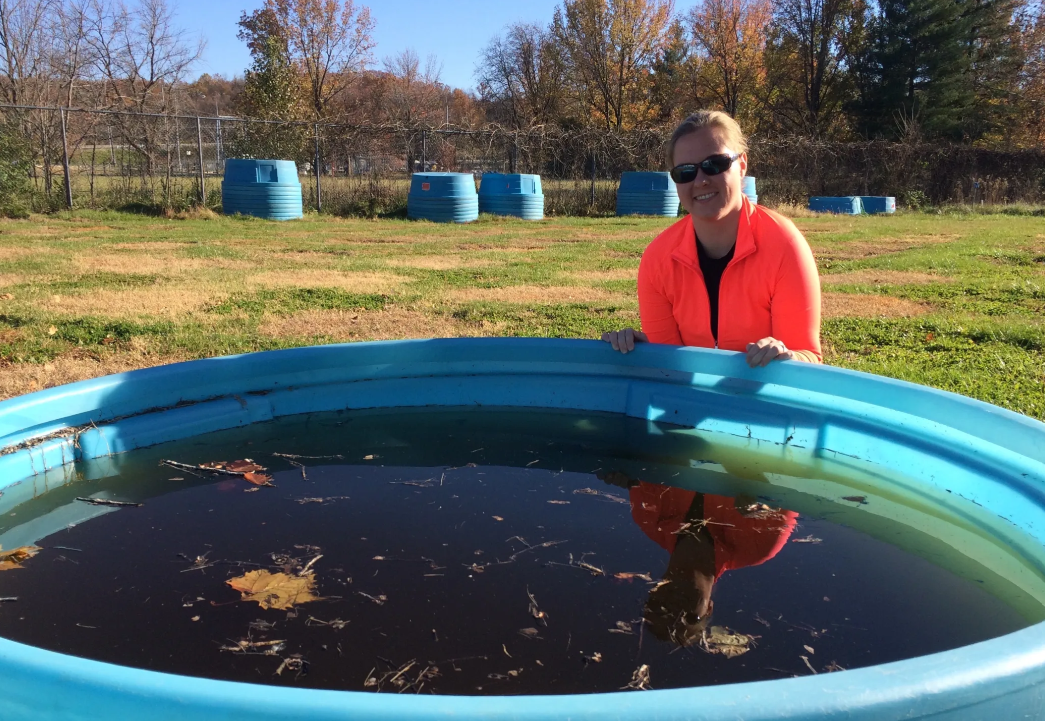
Freya Rowland beside one of the mesocosm experimental units she has used to study food web dynamics, energy transfer, and environmental impacts in aquatic ecosystems.
Q: What is your current position and what led you to pursue this career path?
I am currently a Research Ecologist at the U.S. Geological Survey. I secure grants, collaborate on large interdisciplinary teams to address complex environmental challenges, and run a lab that analyzes samples for thiamine (vitamin B1) and enzyme activity. This work is closely tied to my research on salmon in the Pacific Ocean, where I am working to better understand how vitamin B1 deficiencies develop and affect fish populations.
My time at CIGLR strengthened my interest in government research and the opportunity to work on applied, large-scale scientific questions. I enjoy contributing to projects where teamwork across disciplines is essential for developing solutions. My work remains largely focused on aquatic systems and continues to include harmful algal blooms.
Q: Why were you interested in working at CIGLR?
As I was wrapping up my Ph.D., I wanted to explore what working in a government lab might look like. My time at CIGLR gave me valuable insight into how NOAA labs operate and how universities collaborate with federal research programs. I was also very interested in working on HABs. Everyone wants healthy lakes free from algal toxins, and the fact that the drivers of bloom toxicity are still not fully understood makes it an especially intriguing puzzle.
Q: What advice would you give to someone interested in an environmental science career?
Do research as an undergraduate. You might end up sampling lakes, counting zooplankton in the lab for two years, or extracting tiny otoliths from sticklebacks (small freshwater fish commonly used in ecological research; otoliths are tiny structures in their inner ears that help track age and growth, this is what I did!). Try many different aspects of research to discover what you enjoy. Some people love being outside collecting samples, others are drawn to the chemistry side, and some prefer working with data. You won’t know what you like until you try it.
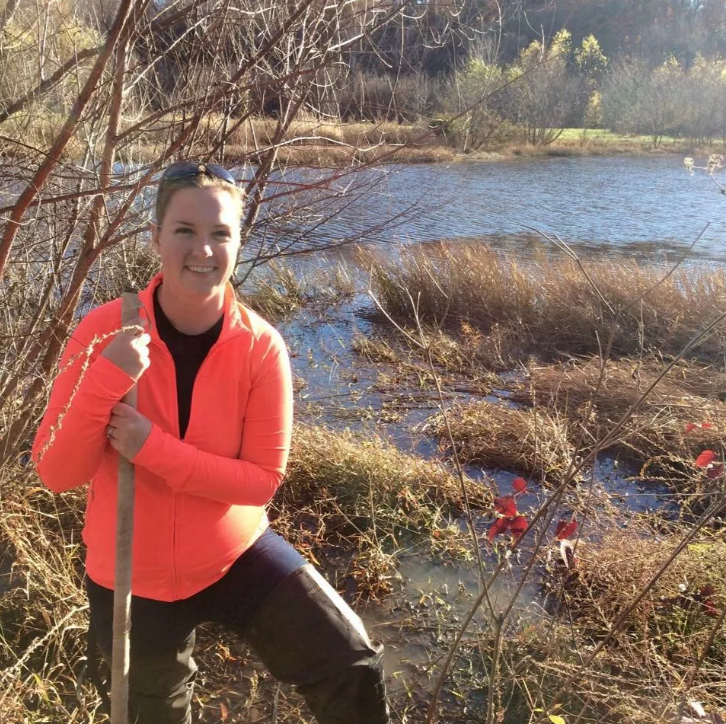
Freya Rowland does fieldwork in a local wetland.
There are many ways to be a scientist, so take advantage of informational interviews with people in local and state government, universities, consulting firms, non-governmental organizations (NGOs), or any other areas that interest you. At one point, I considered pursuing a PhD in environmental engineering, but a visit to the St. Anthony Falls Laboratory at the University of Minnesota in Minneapolis for informational interviews helped me realize it wasn’t the right fit. During these interviews, I had the chance to meet researchers, ask questions, and learn about the kinds of problems they work on. I loved the research questions and the challenges in environmental engineering, but I discovered that I wasn’t interested in conducting that type of research myself. Exploring the lab this way helped me clarify my interests and career direction. Explore widely, ask questions, and try many different experiences, you never know what will resonate.
Q: What was your favorite part about working at CIGLR?
The people. CIGLR is full of talented scientists who are doing ground-breaking research on the Great Lakes, but they are also a joy to interact with. I really miss everyone.
Another highlight for me was having Dr. Craig Stow as a mentor. I wish I could borrow his brain when I write, he has a way of making complex stories both interesting and accessible. Together, we brainstormed at least ten papers that I hope to write someday.
Q: Is there anything else you would like to say?
In this time of uncertainty, I want to say that the work CIGLR does is exceptional and critically important for the health of the Great Lakes. Bravo to all the scientists and support staff for the dedication and impact of the work you do every day.
Related Articles and Resources:
-
- Rowland, F.E., C.G. Byrd, P.T. Kroboth. 2026. Thiaminase I activity is high in grass and silver carp, but negligible in bighead and black carp. Journal of Great Lakes Research. 52(1):102751: (DOI:10.1016/j.jglr.2026.102751).

Freya Rowland inside (left) and outside (right) of a lab at Linnaeus University in Kalmar, Sweden where she taught scientists there how to run thiaminase enzymatic activity assays.
- Rowland, F.E., M.J. Vanni, N.M. Hayes, C.E. Kraft. 2025. Potential thiamine deficiency of phytoplankton across a productivity gradient and seasons in Ohio lakes. Freshwater Biology. 70(11):e70134. (DOI:10.1111/fwb.70134).
- Mantua, N.J., H. Bell, A.E. Todgham, M.E. Daniels, J. Rinchard, J.M. Ludwig, J.C. Field, S.T. Lindley, F.E. Rowland, C.A. Richter, D.M. Walters, B. Finney, H.A.R. Distajo, D.E. Tillitt, D.C. Honeyfield, T. Lipscomb, K. Kwak, J. Kindopp, D. Cocherell, A. Ward, T.H. Williams, J. Harding, N.A. Fangue, C.A. Jeffres, R.I. Ruiz-Cooley, S. Litvin, J.S. Foott, M. Adkison, B. Kormos, P. Harte, F. Colwell, C.P. Suffridge, K.C. Shannon, A. Cranford, C. Ambrose, A.N. Reed, R.C. Johnson. 2025. Widespread thiamine deficiency in California salmon linked to an anchovy-dominated marine prey base. Proceedings of the National Academy of Sciences. (DOI:10.1073/pnas.2426011122).
- Rowland, F.E., E.S. Schyling, L.K. Freidenburg, M.C. Urban, J.L. Richardson, *A.Z.A. Arietta, S.B. Rodrigues, A.D. Rubinstein, M.F. Bernard, D.K. Skelly. 2022. Asynchrony, density dependence, and persistence in amphibian populations. Ecology. 103(7):e3696. (DOI:10.1002/ecy.3696).
- Rowland F.E., C.A Stow, L.T. Johnson, R.M. Hirsch. 2021. Lake Erie tributary nutrient trend evaluation: Normalizing concentrations and loads to reduce flow variability. Ecological Indicators. 125:107601. (DOI:10.1016/j.ecolind.2021.107601).
- Qian, S.S., C.A. Stow, F.E. Rowland, Q. Liu, M.D. Rowe, E.J. Anderson, R.P. Stumpf, T.H. Johengen. 2021. Chlorophyll a as an indicator of microcystin: Short-term forecasting and risk assessment in Lake Erie. Ecological Indicators. 130:108055. (DOI:10.1016/j.ecolind.2021.108055).
- Rowland, F.E., C.A. Stow, T.H. Johengen, A.M. Burtner, D. Palladino, D.C. Gossiaux, T.W. Davis, L.T. Johnson, S.A. Ruberg. 2019. Recent patterns in Lake Erie phosphorus concentrations in response to changing loads. Environmental Science & Technology. (DOI:10.1021/acs.est.9b05326). [Altmetric Score]
- Rowland, F.E., R.L. North, P. McEachern, D.V. Obrecht, T.B. Gurung, S.B. Jones, J.R. Jones. 2019. Phytoplankton Nutrient deficiencies vary with season in sub-tropical lakes of Nepal. Hydrobiologia. (DOI:10.1007/s10750-019-3897-8). [Altmetric Score]
