
11/12/2026: Streamflow Forecasting using Physical-Aware AI/DL Models and Improving the Precipitation Forecasts at the Subseasonal-to-Seasonal Scale in Support of Adaptive Reservoir Operation
Please join us for a Great Lakes Seminar Series – subscribe!
Time: 11:00am – 12:00pm EDT
Location: Virtual or NOAA Great Lakes Environmental Research Laboratory, Lake Superior Hall*
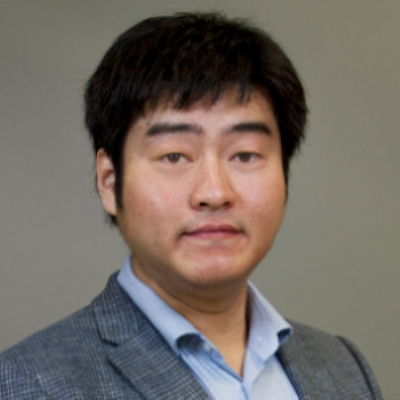
Presenter: Dr. Tiantian Yang, Associate Professor, School for Environment and Sustainability (SEAS), University of Michigan
Title: Streamflow Forecasting using Physical-Aware AI/DL Models and Improving the Precipitation Forecasts at the Subseasonal-to-Seasonal Scale in Support of Adaptive Reservoir Operation
Lunch and Great Lakes related trivia to follow the presentation, with the winning trivia team receiving a prize! Must RSVP by midnight on Sunday November 1, 2026 to attend in person.
Event Flyer
RSVP for In Person Attendance (Required)
Webinar Registration
About the presentation: Reservoirs and lakes are fundamental and multi-functional water infrastructures that collect, store, and deliver surface freshwater for a multitude of uses, including flood and fire control, recreation, wildlife habitat, residential, industrial, agricultural practices, irrigation, hydro-electric power generation, drought mitigation, and more. It is also a critical engineering environment that intervenes with both the hydrological cycle and human factors. Reservoir and lake release decisions, inflow forecasting, and storage management directly influence various aspects of socioeconomic functioning and our nation’s water resources’ security. In recent years, more frequent and severe abrupt weather extremes, natural hazards, aging infrastructure, and increased water demands due to population growth have placed another significant barrier preventing the effective, sustainable, and adaptive operation of the existing reservoir and lake systems. Therefore, new technologies and innovations are critically needed to improve the existing reservoir and lake operation and management, i.e., the “status quo”, of built water systems in our nation.
In support of adaptive reservoir operation, in this talk, Dr. Tiantian Yang will present his current research on enhancing streamflow prediction at subseasonal-to-seasonal (S2S) timescales by improving precipitation forecasts and hydrologic simulations through the integration of physical hydrologic models and physically-aware artificial intelligence and deep learning (AI/DL) tools. These hybrid models aim to retain the interpretability and physical consistency of traditional models while leveraging the pattern recognition and scalability of AI/DL. Case studies will demonstrate how these hybrid AI/DL models perform in forecasting flood events across hundreds of watersheds over CONUS, and how the precipitation could be better predicted at the S2S scale using existing seasonal forecast models
About the speaker: Dr. Tiantian Yang is currently a tenured associate professor in the School for Environment and Sustainability (SEAS) at the University of Michigan (UM) at Ann Arbor. Before joining UM, Dr. Yang was a tenured faculty in the School of Civil Engineering and Environmental Science (CEES) at the University of Oklahoma (OU). He was the associate director of the OU Hydrology & Water Security online master’s degree program at OU. Before becoming a faculty member in OU and UM, Dr. Yang worked in the private sector for a few years in Deltares Netherlands, whose former was Delft Hydraulics and GeoDelft University. During his time in the private sector and consulting world, Dr. Yang served many U.S. federal agencies as clients, including Bonneville Power Administration, Tennessee Valley Authority, and the National Weather Service and its 13 River Forecast Centers. Dr. Yang was an AGU Hydrology Section Early Career Awardee (2025), and also an NSF Early Career Awardee (2023).
Dr.Yang obtained his Ph.D. degree in Civil Engineering from the Department of Civil and Environmental Engineering of the University of California, Irvine (UC Irvine) in 2015, mentored by NAE and Distinguished Professor Dr. Soroosh Sorooshian. Yang’s master’s degree was in Mechanical and Aerospace Engineering from the Department of Mechanical and Aerospace Engineering at UC Irvine (2010). His bachelor’s degree was also in Mechanical and Aerospace Engineering from Tsinghua University, China (2009). Yang’s work is mainly supported by the NSF, the U.S. Bureau of Reclamation, the US Army Corps of Engineers (USACE), DoD Engineering With Nature (EWN), the American Council for Education (ACE)’s International Partnership Program, NOAA, and the DOE’s Clean Energy Research Center on Water-Energy Technology (CERC-WET) Program.
_____________________________________________________
*IMPORTANT VISITOR INFORMATION
All seminar attendees are required to receive a visitor badge from the front desk at the NOAA Great Lakes Environmental Research Laboratory facility. Attendees need to present a valid U.S. photo ID or green card. If you are a Foreign National, we encourage you to attend virtually. For questions regarding building access, please email Margaret Throckmorton at [email protected]. Additional questions? Contact Margaret Throckmorton: [email protected]; visit ciglr.seas.umich.edu for more information.