
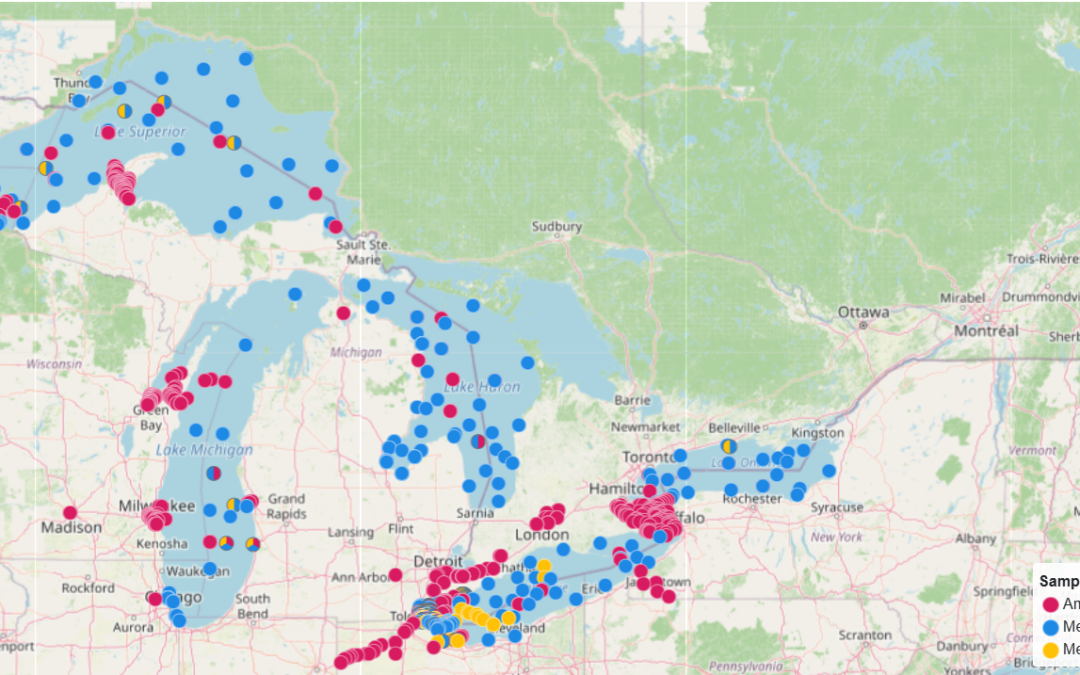
A single vial of Great Lakes water can contain an extraordinary amount of information. Within it are traces of the organisms that live there, the genes they carry, and the biological processes and chemical signals associated with them. Scientists can uncover this hidden world using ‘omics approaches that analyze biological molecules, including DNA, RNA, and other small molecules.
These techniques can help researchers characterize microbial communities, investigate harmful algal blooms and the toxins they produce, detect invasive species, track pathogens, and understand how organisms respond to environmental change. But generating the data is only part of the challenge. To realize its full value, people also need to be able to find, understand, compare, and use it.
That is where the Great Lakes Atlas of Multi-Omics Research (GLAMR) comes in.
Available at greatlakesomics.org, GLAMR is a public discovery platform for exploring environmental ‘omics data from the Laurentian Great Lakes and supporting NOAA’s Great Lakes research. It brings together data from multiple studies and connects them with information about when and where samples were collected, how they were analyzed, and the environmental conditions measured at the time of collection. By bringing these datasets together in one place, GLAMR makes it easier for researchers and other users to discover and explore information that can help answer new questions about the Great Lakes.
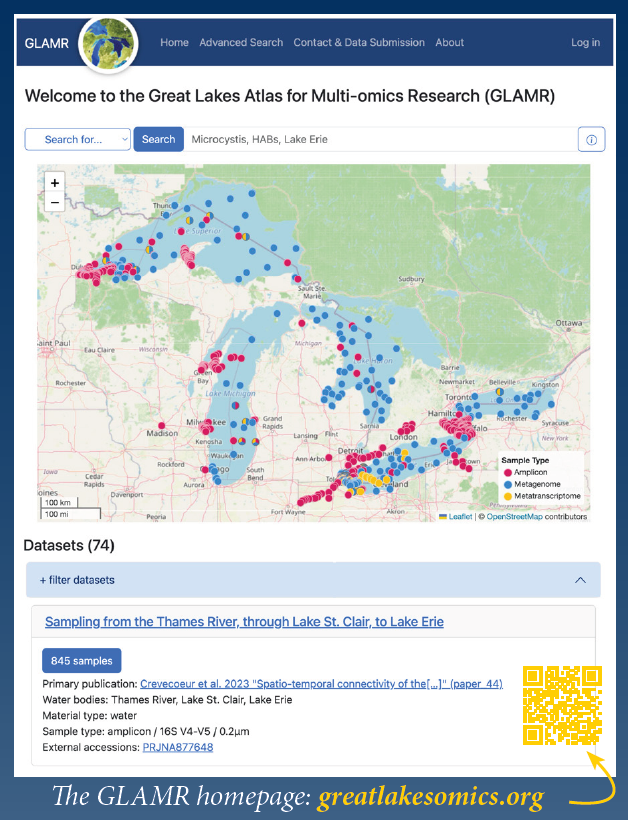
Click on the image to explore the Great Lakes Atlas for Multi-omics Research (GLAMR) website.
Giving Valuable Data a Life Beyond a Single Study
Most ‘omics datasets are collected to answer the questions of a specific research project. However, unlike traditional tests that look for one organism at a time, ‘omics methods capture broad biological profiles, cataloging entire communities or suites of genes at a time. Once a project is complete, those data can still contain valuable information that can be used to address entirely different Great Lakes research questions. Combining information across studies can reveal patterns across locations, seasons, years, or even across different Great Lakes.
“Environmental ‘omics datasets are like time capsules, capturing an entire community of organisms and their genetic potential at a specific moment,” said Anders Kiladel, PhD, University of Michigan. “GLAMR was built to ensure data don’t end up locked away in isolated files once a study ends, but instead remain accessible to answer new questions across the region.”
Reusing these data is not always easy. Datasets may be deposited across different repositories, described using inconsistent terminology, processed in different ways, or separated from important environmental measurements. GLAMR is designed to help lower those barriers by bringing together multi-omics datasets, including targeted gene profiles, metagenomes, metatranscriptomes, metabolomes, and related data types, with associated metadata and environmental information. Datasets are processed using standardized computational pipelines, allowing users to search for species or genes of interest, and compare data across studies. Users can explore available studies and download data products such as sequencing reads, abundance tables, and assemblies for further analysis.
Designing GLAMR Around Real-World Needs
A database can contain a wealth of information and still fall short if it does not reflect how people actually work. For that reason, our current project focuses not only on what data GLAMR contains, but also on how people will use it and what they need from the platform. John McClure (CIGLR), Anders Kiledal (University of Michigan, Earth and Environmental Sciences), and CIGLR Director Greg Dick are working to engage with Great Lakes ‘omics stakeholders to learn how they search for, interpret, and apply environmental data. This community includes academic researchers, government scientists, resource managers, nonprofit groups, water professionals, educators, industry partners, and others working to understand and protect the Great Lakes.
“Through a stakeholder survey and follow-up conversations, our team is asking questions about how ‘omics information is used in the Great Lakes; the information and resources ‘omics users need; the barriers they face in finding, interpreting, and reusing these data; as well as the accessibility and usability of the existing GLAMR platform,” said John McClure, Research Engagement Specialist, CIGLR.
Feedback from the survey and conversations will help guide future development of the GLAMR website, data products, documentation, training materials, and potential decision-support capabilities. This work will also help us identify opportunities for connecting GLAMR to other databases and tools already used by the Great Lakes community.
Turning Data into Shared Capacity
GLAMR’s potential extends beyond any single research group or institution. In addition to supporting NOAA research, GLAMR can serve educators, water resource managers, decision-makers, researchers, and the general public.
“Our goal with GLAMR is to turn complex, disparate datasets into a shared community resource. When datasets from across the region speak the same language, everyone benefits,” said Anders Kiladel.
Researchers may use the platform to locate comparable datasets or explore new scientific questions. Resource managers may identify information relevant to water quality, harmful algal blooms, pathogens, or invasive species. Educators may use Great Lakes data to introduce students to biodiversity, environmental genomics, and data science. Modelers can use standardized biological and environmental information to strengthen ecosystem analyses. GLAMR’s standardized outputs also create opportunities for new applications, including the use of these data in artificial intelligence and machine learning. Anyone can access the site to explore, for example, how certain species or genes are distributed across the Laurentian Great Lakes.
If you work with Great Lakes data, conduct or apply ‘omics research, make environmental decisions, teach about freshwater systems, or see another potential use for GLAMR, we invite you to share your perspective through our stakeholder survey.
To explore the platform and learn more, visit greatlakesomics.org and check out our new fact sheet. To ask a question, suggest or contribute a dataset, or discuss potential data products or features, contact [email protected].
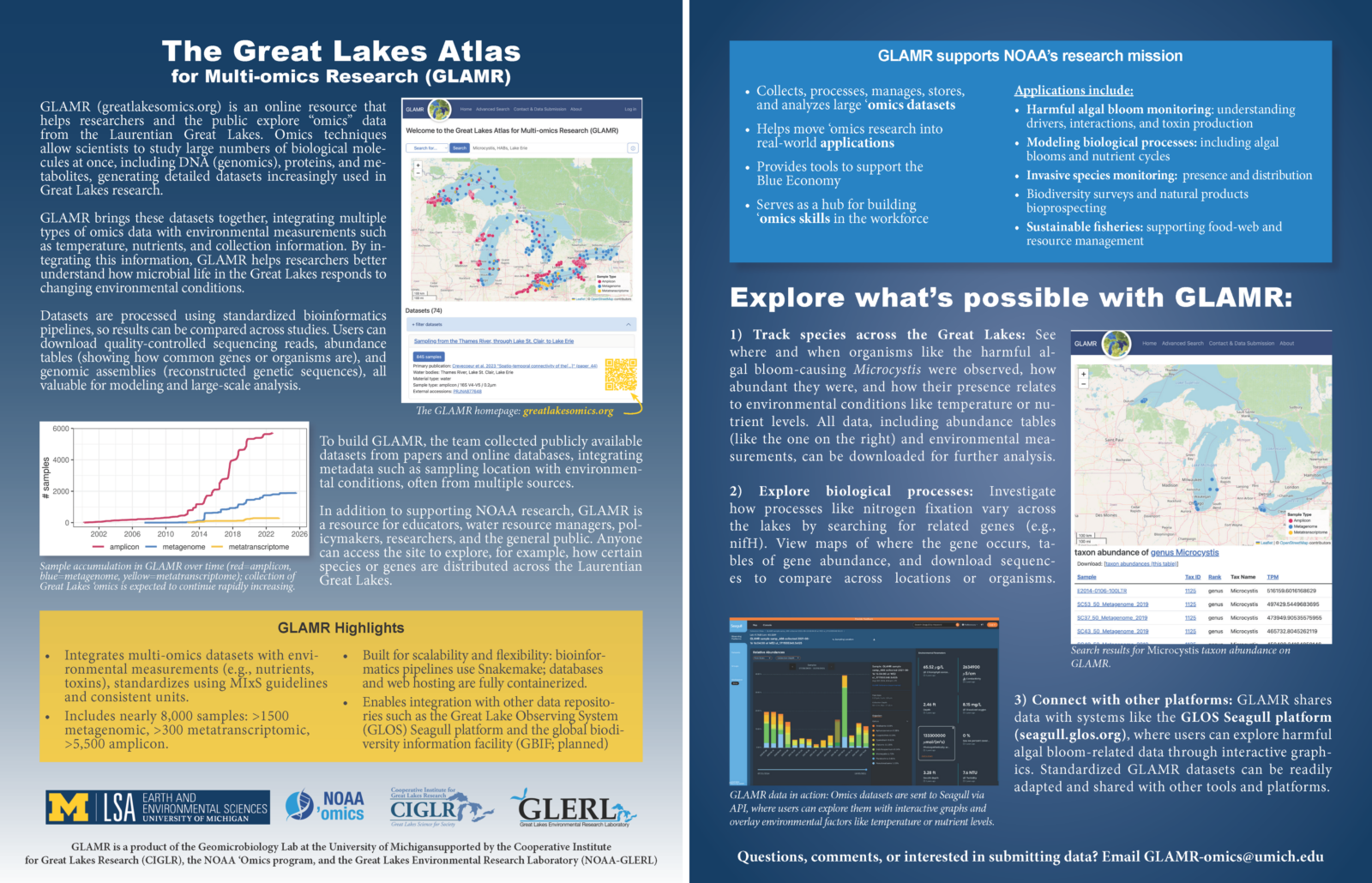
Click the image to expand the fact sheet and learn more about the Great Lakes Atlas for Multi-omics Research (GLAMR).
GLAMR is a product of the Geomicrobiology Lab at the University of Michigan with support from the Cooperative Institute for Great Lakes Research (CIGLR), the NOAA ‘Omics program, and the Great Lakes Environmental Research Laboratory (NOAA-GLERL).
Additional Resources:
Want to stay connected with CIGLR? Subscribe and follow us on social media to receive the latest news, seminar announcements, and updates from across the Consortium.
Follow us on: Facebook, Instagram, Bluesky, X, LinkedIn, YouTube, Flickr