
- This event has passed.
12/04/25: Modeling the Fate and Transport of Plastic Pollution Using Great Lakes Hydrodynamic Models and Exploring the Potential Impact of Data Assimilation

Please join us for a Great Lakes Seminar Series – subscribe!
Time: 12:00pm – 1:00pm EST
Location: NOAA Great Lakes Environmental Research Laboratory, Lake Superior Hall and Virtual
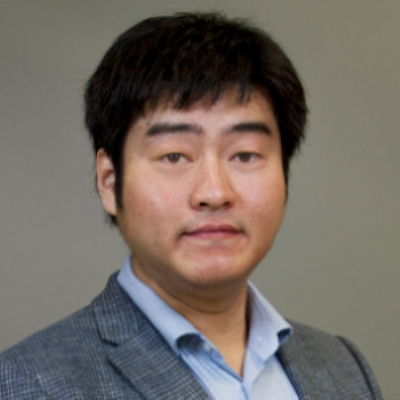
Presenter: Matthew Hoffman, Professor, School of Mathematics and Statistics, Rochester Institute of Technology
Title: Modeling the Fate and Transport of Plastic Pollution Using Great Lakes Hydrodynamic Models and Exploring the Potential Impact of Data Assimilation
About the presentation: Understanding the transport and fate of plastic pollution is crucial for modeling the exposure risk for different ecosystems and organisms. I will discuss efforts to model the transport of plastic pollution in the Great Lakes using NOAA’s operational hydrodynamics models and custom built transport code to simulate changing particle properties. The models allow for advection, turbulent mixing in the vertical, density driven sinking, beaching, deposition, and biofouling of particles. The transport model relies on accurant hydrodynamic fields, so I will also describe initial efforts to perform data assimilation on the NOAA model output using a Local Ensemble Transform Kalman Filter (LETKF) approach on the FVCOM model of Lake Erie. We test the LETKF using simulated observations of surface temperature and vertical profiles of temperature.
About the speaker: Matthew J. Hoffman is a Professor in the School of Mathematics and Statistics at the Rochester Institute of Technology. Dr. Hoffman received the B.A. degree in Mathematics and Astrophysics from Williams College, Williamstown, MA, USA and M.S. and Ph.D. degrees in Applied Mathematics and Scientific Computation from the University of Maryland, College Park, MD, USA. He was a post-doctoral fellow in the Earth and Planetary Science Department at Johns Hopkins University, Baltimore, MD, USA , where he worked on data assimilation for the Chesapeake Bay. Since moving to RIT, he has shifted his focus to the Great Lakes, including some work on data assimilation on the NOAA forecast model for Lake Erie. Over the past decade, his work has focused on modeling the input, transport, and fate of plastic pollution in fresh water, including the Great Lakes.
**Registration is not required**
_____________________________________________________
IMPORTANT VISITOR INFORMATION
As of July 2025 the GLERL facility can no longer accept visitors for the Great Lakes Seminar Series due to staffing shortages. Please attend virtually using the link above.
All seminar attendees are required to receive a visitor badge from the front desk at the NOAA Great Lakes Environmental Research Laboratory facility. Attendees need to present a valid U.S. photo ID or green card. If you are a Foreign National, we encourage you to attend virtually. For questions regarding building access, please email Margaret Throckmorton at [email protected]. Additional questions? Contact Margaret Throckmorton: [email protected]; visit ciglr.seas.umich.edu for more information.