
In partnership with NOAA GLERL, the Great Lakes Summer Fellows Program is a cornerstone of CIGLR’s mission to train the next generation of scientists. Each year, CIGLR has the pleasure of hosting a group of bright, emerging researchers for a 12-week fellowship. During this time, fellows conduct in-depth research projects, attend career development seminars and science discussions, receive specialized skills training, and build strong connections as a cohort.
Over these 12 weeks, the fellows, their mentors, and the CIGLR ECO (Engagement, Career Training, and Outreach) team demonstrated just how much can be achieved in a short time. We applaud everyone involved for their dedication, creativity, and positivity in shaping a meaningful, career-building experience.
Want to hear the 2025 Great Lakes Summer Fellows’ final project presentations and learn more about their experiences this summer? Follow this link—the recordings will be available soon.
Please join us in congratulating the 2025 Great Lakes Summer Fellows. We are excited to recognize and celebrate their hard work and accomplishments:
Noah Bernot
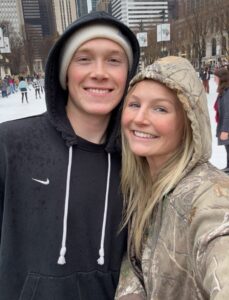 Indiana University Bloomington
Noah Bernot, a junior at Indiana University majoring in computer science and mathematics, worked on the Data-Driven Buoy Deployment Project under the mentorship of Dr. Dani Jones and Russ Miller from CIGLR and Joe Smith and Dr. Shelby Brunner from the Great Lakes Observing System (GLOS). “I have been developing a deep learning model to evaluate where buoys are currently placed throughout the Great Lakes, and using that information to suggest future deployment opportunities, while also pioneering environmental research using the DeepSensor Python library,” said Bernot.
Originally from Noblesville, Indiana, Noah developed a passion for computer science through coursework and environmental conservation through travel. “I previously worked on deep learning projects that included predicting ice thickness on the Devon ice cap in Canada and training a reinforcement learning model to play Blackjack,” said Bernot. “In my free time, I enjoy watching hockey and spending time with my cat, Doom. I’ve really enjoyed using my past skills and experience to contribute to my fellowship work and to explore more about the intersection of computer science and environmental science.”
Ronnie Geiger
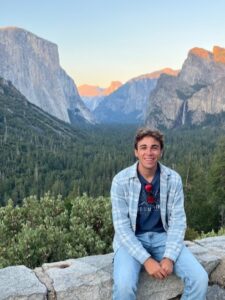 Cornell University
Ronnie Geiger, from Lagrangeville, New York, worked with Dr. Abby Hutson from CIGLR and Rachel Kelly from the Great Lakes Integrated Sciences and Assessments (GLISA) to evaluate the performance of the GFDL-CM4 climate model over the Great Lakes region. “I analyzed model output and compared it to observations to better understand precipitation patterns, temperature trends, and lake-atmosphere interactions, culminating in a Climate Model Report Card,” said Geiger.
“I’m a senior majoring in Atmospheric Science at Cornell University,” he added. “On campus, I serve as Social Chair for the Cornell Chapter of the American Meteorological Society and am a member of the Storm Chasing Club. I also lead Big Red THON, a non-profit organization and 10-hour dance marathon that supports pediatric cancer patients and their families, which has been incredibly rewarding. Outside of school, I enjoy hiking and exploring the outdoors and have visited 25 national parks! I also like playing pick-up basketball and discovering new places. I’ve really enjoyed collaborating with CIGLR and NOAA GLERL scientists this summer and getting to know the Great Lakes!”
Elias Hanson
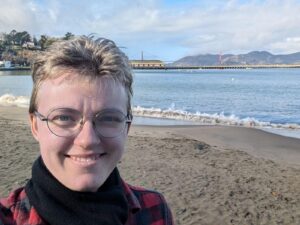 St. Olaf College
Elias Hanson is an Environmental Science student from St. Olaf College in Minnesota. “For my project this summer, I investigated how aquatic species with the potential to invade the Great Lakes ecosystem were becoming more or less likely to do so under the effects of a changing climate,” said Hanson. Under the mentorship of Dr. Rochelle Sturtevant (Michigan Sea Grant) and Dr. Ashley Elgin (NOAA GLERL), Elias found the work with CIGLR and camaraderie with the other fellows both satisfying and enjoyable.
“Outside of research, I’ve appreciated getting to know the staff and researchers at NOAA GLERL and CIGLR over the summer,” said Hanson. “In my free time, I enjoy reading, experimenting with new baking recipes, and exploring the outdoors through backpacking trips.”
Stacey Naeemullah
 University of Hawaiʻi at Mānoa
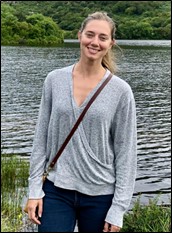
Stacey Naeemullah worked with Drs. Yang Song and Ayumi Fujisaki-Manome from CIGLR and Dr. David Wright from NOAA GLERL this summer to investigate the use of ensemble machine learning to predict environmental contaminant spread in the Straits of Mackinac. “The Straits of Mackinac are a hydrologically unique feature connecting Lakes Michigan and Huron, with a bidirectional current, winter ice cover, and a peak volumetric flow between the two lakes that can be larger than some rivers,” said Naeemullah. “Rapid prediction of contaminant spread in the Straits is highly dependent on the conditions at the time. Using extreme gradient boosting and random forest machine learning methods, our team was able to estimate the scale of particle spread with reasonably good accuracy. In the future, we hope to refine the inputs for this technique and estimate the geographic extent of particle spread.”
Originally from New Orleans, Louisiana, Stacey recently completed her Master of Science in Physical Oceanography at the University of Hawaii at Mānoa. “This summer has been a great opportunity to apply machine learning techniques to real-world environmental challenges,” said Naeemullah. “In my spare time, I enjoy hiking and being on the water, and I’ve really appreciated learning more about the hydrology of the Laurentian Great Lakes while working on this project with my mentors.”
Jondall Norris
 Bowdoin College
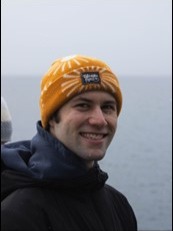
Jondall Norris, from Portland, Maine, recently graduated with a bachelor’s degree in physics from Bowdoin College in Brunswick, Maine. Under the mentorship of Drs. Hazem Abdelhady, Ayumi Fujisaki-Manome, David Cannon, and Dani Jones from CIGLR, and James Kessler from NOAA GLERL, he developed a deep learning model to reconstruct the spatial distribution of ice cover in the Great Lakes dating back to the early 20th century. “This summer I developed a deep learning model to recreate what ice cover in the Great Lakes looked like as far back as the early 1900s,” said Norris. “I used long-term air temperature records from weather stations in towns around the lakes, along with historical ice charts from the 1970s onward. First, the model learns from the ice charts to understand how temperature relates to ice cover. Then, it uses that knowledge to predict what ice conditions likely were before satellites could observe them. Traditional ice models rely on physics-based equations, like those that describe how heat moves or energy is conserved. Deep learning takes a different approach, it can learn patterns and connections in data, even when those relationships are complex or not fully understood. You might have seen deep learning in action with voice assistants, self-driving cars, or the way social media decides what to show you. Scientists at CIGLR and around the world are now using these powerful tools to improve existing models or create entirely new ones to better understand our planet.”
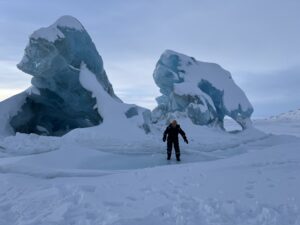
Jondall exploring icebergs during fieldwork in the Norwegian Arctic!
Outside of research, Jondall loves spending time outdoors. “I enjoy hiking, skiing, canoeing, and exploring new places,” said Norris. “I have a background in outdoor leadership, having worked as a ski instructor, sailing coach, backpacking guide, and sea kayaking guide in locations across the country. This summer, I’ve enjoyed combining my passion for physical oceanography with applied deep learning techniques.” His academic interests include physical oceanography, geophysics, Earth systems modeling, and polar science, and he plans to pursue a graduate degree in physical oceanography in the next few years. “Recently, I’ve been getting back into reading and am currently enjoying An Astronaut’s Guide to Life on Earth by Chris Hadfield,” said Norris. “I’ve had a great time exploring Ann Arbor, Michigan’s Lower Peninsula, and the Great Lakes this summer.”
.
.
Matthew Parent
 University of Michigan
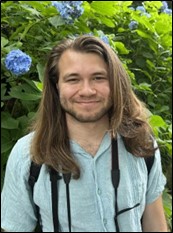
Matthew Parent worked with Drs. Yi Hong and Dani Jones from CIGLR and Dr. Lauren Fry from NOAA GLERL, applying deep learning methods to predict water runoff in basins across the Great Lakes region. “Our goal was to accurately predict total water supply in the Great Lakes,” said Parent. “We hope that advances in this work will improve existing hydrologic models and support regional and global water resource management.”
Originally from Ann Arbor, Michigan, Matthew holds degrees from Stanford University and the University of Michigan. “This fellowship gave me the opportunity to contribute to the global understanding of water and earth systems while learning from leading scientists at CIGLR and NOAA GLERL,” said Parent.
Brooke Tillotson
 Colorado School of Mines
Brooke Tillotson worked with Drs. Meena Raju and David Cannon from CIGLR, and Dr. Mark Rowe and Peter Alsip from NOAA GLERL, to study patterns in Lake Erie wind and wave height and predicting when harmful algal blooms in the lake might start, using computer simulations of how wind and waves stir up the lakebed.
“Originally from Connecticut, I earned my Bachelor of Arts in Earth and Environmental Sciences from Boston University and my Master of Science in Hydrological Sciences and Engineering from the Colorado School of Mines, where I studied projected riverine and lakeshore heatwaves in the Great Lakes region,” said Tillotson. “In my spare time, I enjoy hiking, camping, paddleboarding and kayaking, vegan cooking, and photographing wildlife. This summer, I loved being fully immersed in large lake science and getting a firsthand look at the wide range of careers in limnology.”
See more of what the fellows have been up to this summer:
.
(Top two photos): The 2025 Great Lakes Summer Fellows had an incredible trip to Muskegon, Michigan! They toured NOAA GLERL’s Lake Michigan Field Station, exploring the labs, boats, and research facilities, and then visited our partners at Grand Valley State University’s Annis Water Resources Institute, where Dr. Al Steinman gave an in-depth tour of their labs and equipment. It was a day full of learning, collaboration, and a deeper understanding of the Great Lakes and the important research happening in the region.
(Remaining four photos): The NOAA GLERL social committee brought our community together for a fun potluck picnic and friendly kickball game this summer at the Marshview Meadow Park in Saline, Michigan. Fellows, staff, and friends enjoyed sharing homemade dishes, playing kickball, and spending a relaxed evening connecting outside the lab.
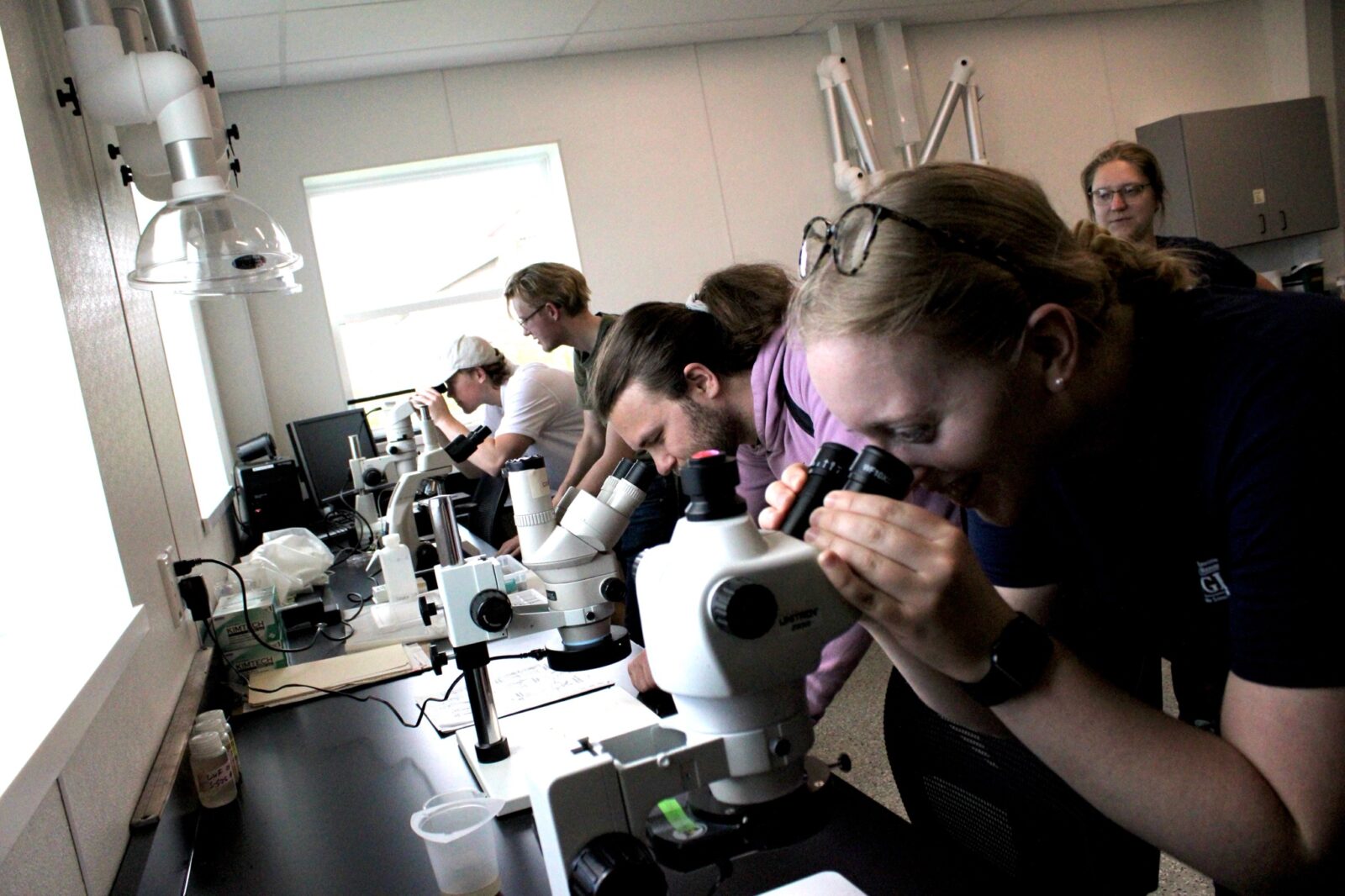
The 2025 CIGLR Great Lakes Summer Fellows enjoying a tour of NOAA’s Lake Michigan Field Station and GVSU’s Annis Water Resources Institute in Muskegon, Michigan. From front: Brooke Tillotson, Matt Parent, Elias Hanson, and Noah Bernot.
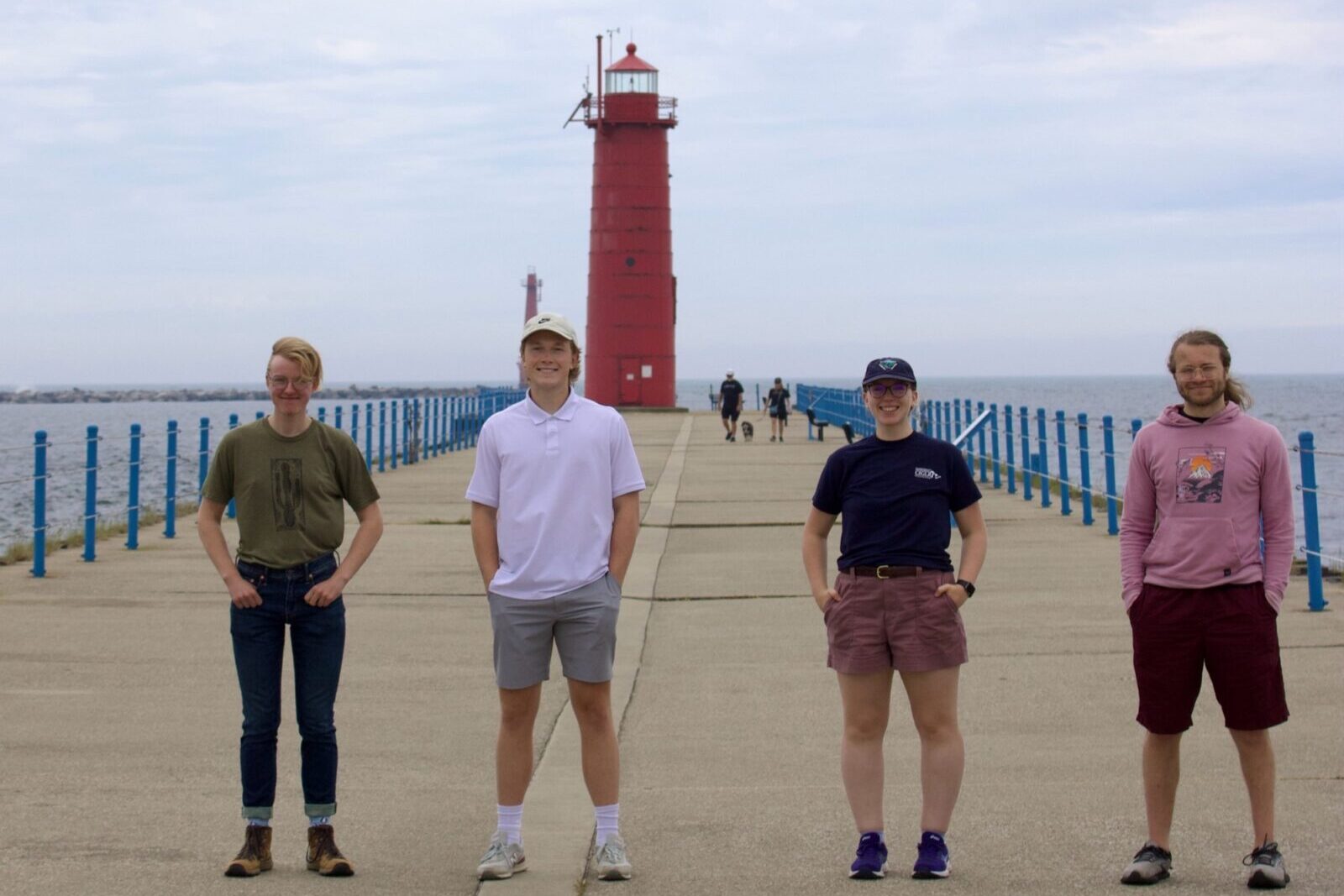
The 2025 Great Lakes Summer Fellows at the Muskegon South Pierhead Lighthouse. It was a great day to enjoy Lake Michigan! Left to Right: Elias Hanson, Noah Bernot, Brooke Tillotson, & Matt Parent.
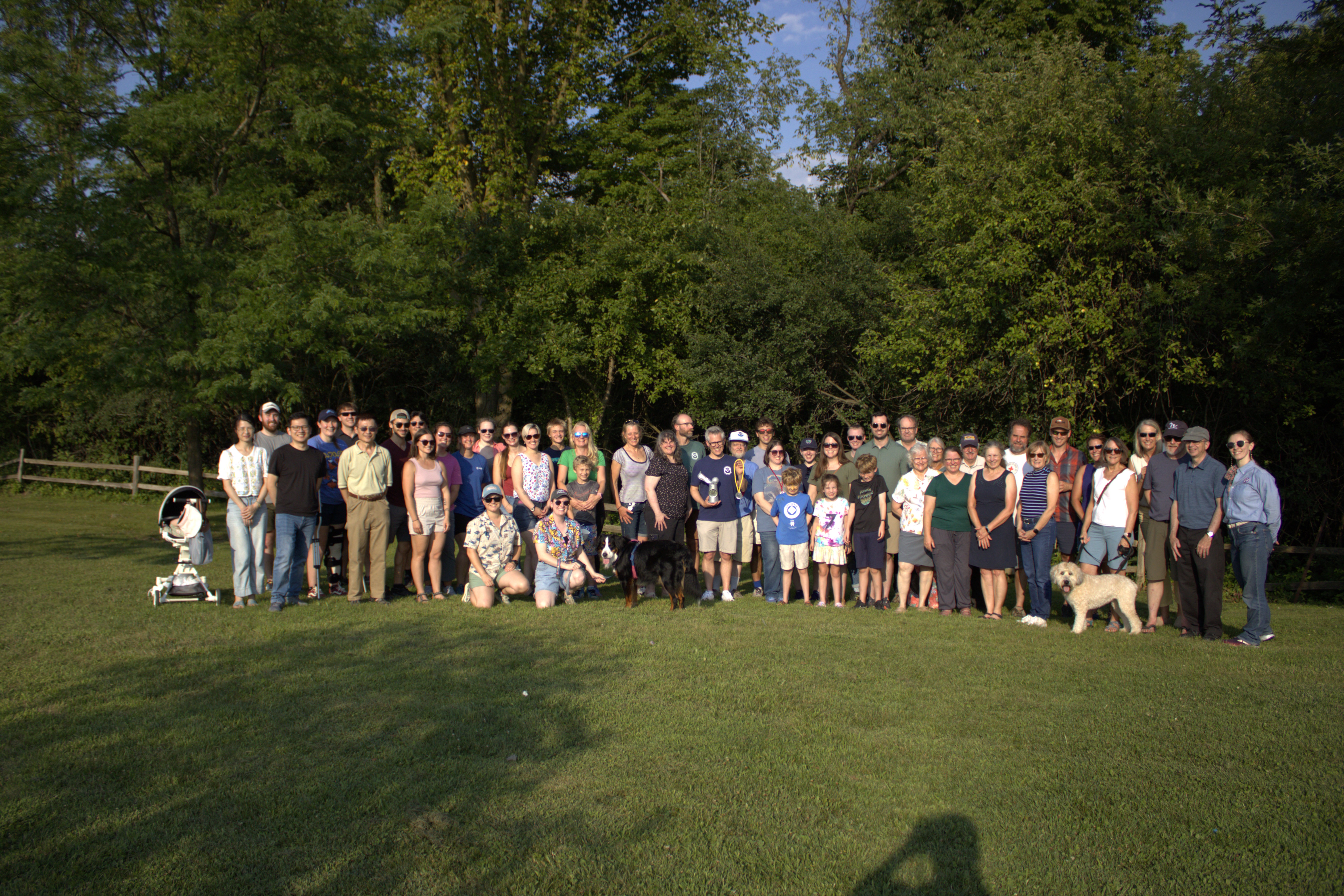
Our NOAA GLERL, CIGLR, and friends Great Lakes community gathered for a late summer picnic.
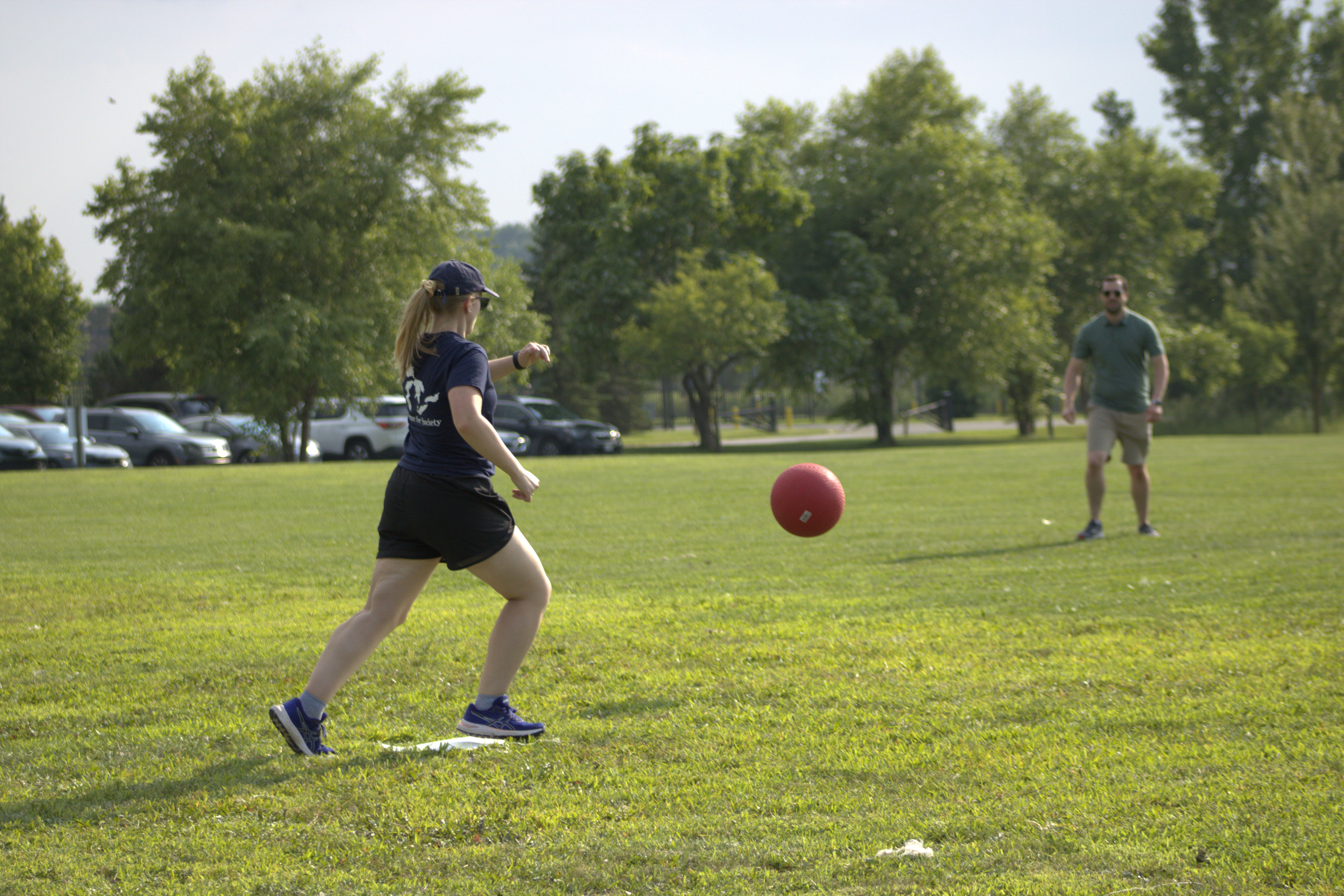
Brooke Tillotson (front) showing off her kickball skills.
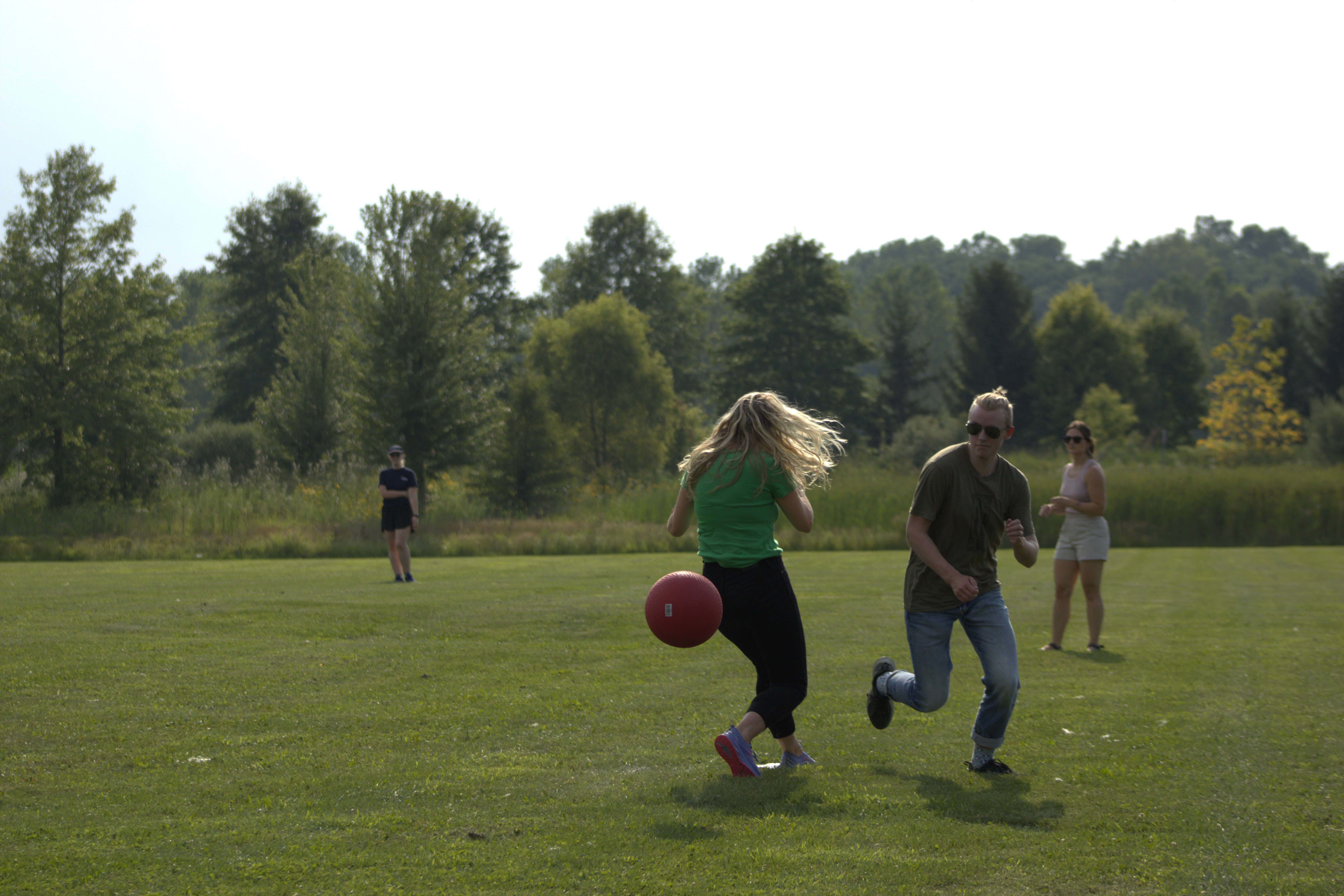
Elias Hanson (middle right) proving kickball is serious business.
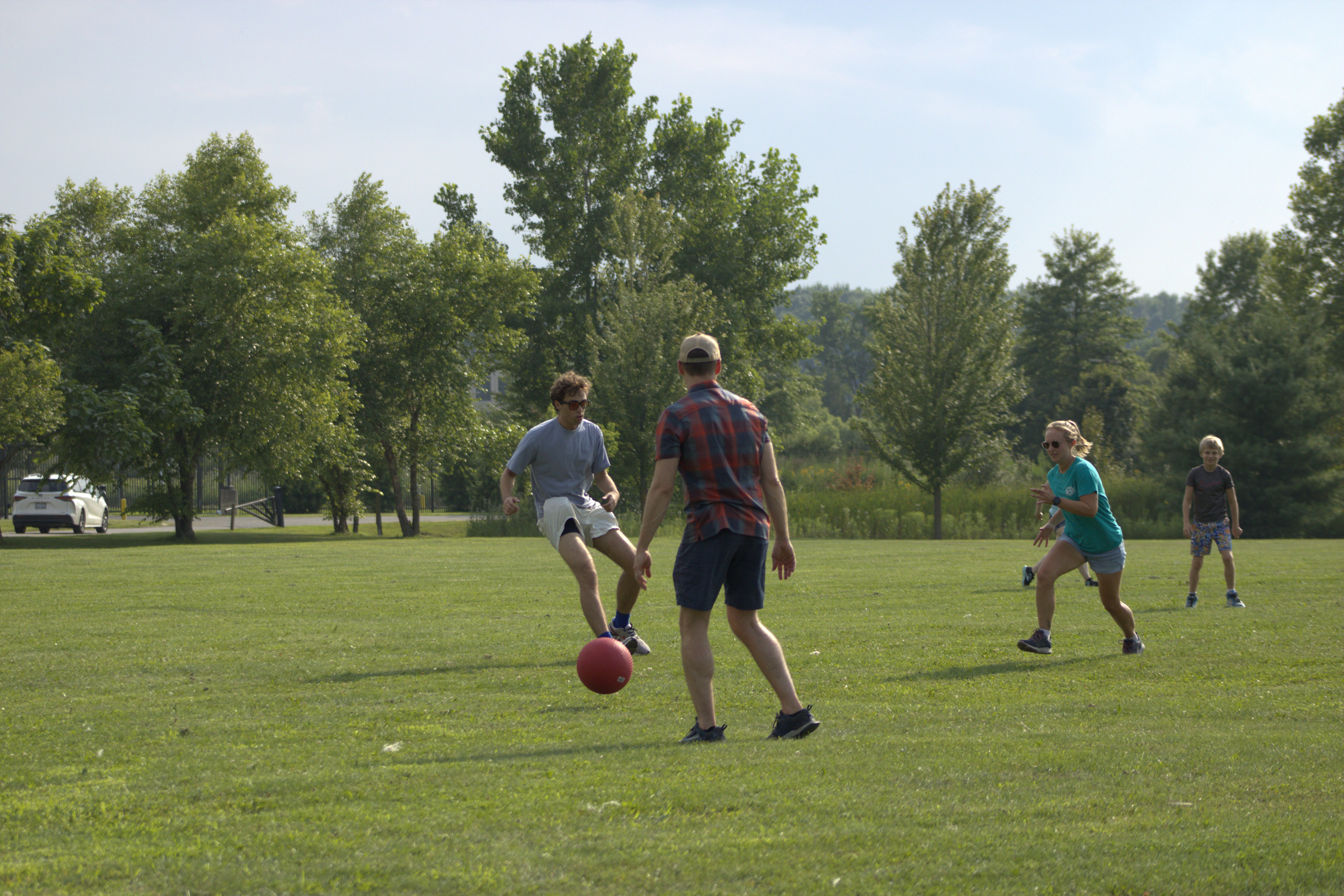
Ronnie Geiger (back left) mid-kick at the summer potluck game.